A Plain-Language Guide to EMS Software, ePCR, Scheduling, Dispatch and Why Every Modern Agency Should Be Using It
Ready to simplify patient care documentation and improve operational visibility? Learn how EPR Fireworks’ EMS software can connect Fire and EMS operations in one configurable Records Management System that helps agencies streamline reporting, reduce administrative work, and make better data-driven decisions.
👉 Learn more: https://eprfireworks.com/solutions-incident-epcr-response/
Short Answer: What is EMS software?
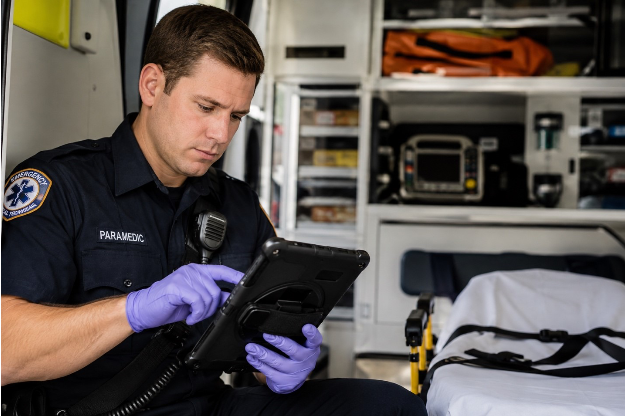
EMS software is technology designed to help Fire and EMS agencies manage emergency medical operations. A modern EMS software platform supports electronic patient care reporting (ePCR), crew scheduling, dispatch integration, records management, reporting, compliance, analytics, and operational planning within one connected system.
Rather than relying on paper forms, spreadsheets, and disconnected applications, today’s EMS software allows agencies to document patient care once and use that information across multiple workflows, improving accuracy, reducing duplicate data entry, and giving leadership greater visibility into department performance.
Table of Contents:
- What Is EMS Software?
- Why EMS Software Matters More Than Ever
- The Core Components of EMS Software
- What Is EMS Charting Software?
- What Is EMS Scheduling Software?
- What Is EMS Dispatch Software?
- Why Fire and EMS Software Works Better Together
- How AI Is Changing EMS Software
- Common Challenges EMS Agencies Face
- Choosing the Right EMS Software
- A Real-World Example
- The Future of EMS Software
- Frequently Asked Questions
- Final Thoughts
Every EMS Call Generates More Than Patient Care
Every EMS response creates valuable operational information.
Dispatch details, patient assessments, treatments, medications, transport information, crew assignments, response times, billing data, and compliance reporting all become part of a patient’s record and your agency’s operational history.
Managing that information manually—or across multiple disconnected systems—creates unnecessary work, increases documentation errors, and makes it difficult for leadership to see the complete picture.
Modern patient care reporting software helps agencies connect these workflows into one centralized platform that supports responders in the field while giving administrators and leadership better tools for compliance, reporting, staffing, and operational decision-making.
Learn how EPR Fireworks simplifies EMS documentation:
https://eprfireworks.com/solutions-incident-epcr-response/
As reporting requirements continue to evolve and agencies face increasing call volumes, staffing shortages, and higher expectations for accountability, EMS software has become an operational necessity rather than simply an administrative convenience.
What Is EMS Software?
At its core, EMS software replaces the manual, disconnected tools many agencies have traditionally used to manage emergency medical services.
Instead of maintaining:
- Paper patient care reports
- Whiteboard crew schedules
- Separate dispatch logs
- Stand-alone billing systems
- Individual spreadsheets
- Multiple reporting databases
A modern EMS software platform connects these functions into one integrated environment.
Information entered once—such as patient demographics received during dispatch—can automatically flow into the patient care report, quality assurance workflows, reporting systems, and billing processes without requiring crews to repeatedly enter the same information.
The result is better documentation, fewer errors, and more time spent serving patients rather than completing paperwork.
Fireworks Insight
The most effective EMS software does more than document patient care. It connects dispatch, scheduling, incident reporting, personnel, assets, analytics, and compliance into one configurable platform that supports the entire agency.
Why EMS Software Matters More Than Ever
The role of EMS has changed significantly over the last decade.
Departments are responding to higher call volumes, more complex medical emergencies, evolving reporting standards, and growing expectations from local governments and healthcare partners.
At the same time, staffing shortages have made operational efficiency more important than ever.
Modern EMS software helps agencies address these challenges by:
- Reducing duplicate documentation
- Improving reporting accuracy
- Supporting NEMSIS compliance
- Integrating with dispatch systems
- Accelerating reimbursement
- Providing operational analytics
- Improving quality assurance
- Giving leadership real-time visibility into department performance
Instead of spending hours correcting incomplete reports or combining spreadsheets for monthly reports, agencies can access accurate operational data whenever they need it.
The Core Components of EMS Software
Most modern EMS software platforms include several connected capabilities.
Electronic Patient Care Reporting (ePCR)
Electronic patient care reporting (ePCR) is often the heart of an EMS platform.
A modern ePCR solution allows crews to document:
- Patient assessments
- Vital signs
- Treatments
- Medications
- Procedures
- Transport information
- Clinical narratives
Many systems also validate required fields before reports can be submitted, helping agencies maintain compliance with NEMSIS reporting requirements.
See how EPR Fireworks’ ePCR platform supports Fire and EMS agencies: https://eprfireworks.com/solutions-incident-epcr-response/
Records Management
EMS software stores and organizes operational records, allowing agencies to quickly retrieve historical information for reporting, audits, investigations, or quality assurance.
Instead of searching through filing cabinets or multiple databases, users can access complete incident histories from one location.
Reporting and Analytics
Operational dashboards allow leadership to monitor:
- Response times
- Call volume
- Unit utilization
- Patient demographics
- Clinical performance
- Documentation trends
- Agency workload
Rather than simply collecting data, agencies can use it to improve staffing, identify trends, and support strategic planning.
Fireworks Insight
Reporting explains what happened. Analytics helps agencies understand why it happened and where operational improvements can be made.
What Is EMS Charting Software?
EMS charting software—commonly called ePCR software—is where crews document patient care.
A quality EMS charting solution should allow responders to quickly capture clinical information while reducing documentation errors.
Modern EMS charting software can:
- Auto-populate dispatch information
- Validate required fields
- Support NEMSIS reporting
- Capture digital signatures
- Attach images and documents
- Import cardiac monitor data
- Support quality assurance reviews
The goal isn’t simply completing reports faster. It’s creating complete, accurate patient records that support patient care, compliance, reimbursement, and operational analysis.
What Is EMS Scheduling Software?
Managing crew schedules can be one of the most time-consuming administrative responsibilities within an EMS agency.
EMS scheduling software helps automate many of those tasks.
Capabilities often include:
- Shift scheduling
- Overtime tracking
- Time-off requests
- Certification monitoring
- Shift swaps
- Staffing minimums
- Credential expiration alerts
Instead of manually reviewing spreadsheets, supervisors can quickly identify scheduling conflicts before they affect operations.
What Is EMS Dispatch Software?
EMS dispatch software helps coordinate emergency responses from the moment a call is received.
Many agencies use Computer-Aided Dispatch (CAD) systems that integrate directly with EMS software.
This allows dispatch information—including incident location, responding units, timestamps, and caller details—to automatically populate patient care reports.
The result is:
- Less manual entry
- Faster documentation
- Improved reporting accuracy
- Better operational coordination
Why Fire and EMS Software Works Better Together
Many departments today provide both fire suppression and EMS services.
Running separate systems for each operation often creates duplicate work and fragmented information.
Integrated Fire and EMS software creates one connected operational environment.
Instead of maintaining separate databases, agencies can share:
- Incident information
- Personnel records
- Apparatus
- Property records
- Hydrants
- Training
- Assets
- Inspections
- Operational dashboards
- Reporting workflows
One response often includes both fire and EMS personnel. A unified platform ensures everyone is working from the same information.
Fireworks Insight
Departments shouldn’t have to choose between Fire software and EMS software. A connected Records Management System provides one source of truth while supporting the unique workflows required by each discipline.
How AI Is Changing EMS Software
Artificial intelligence is quickly becoming one of the most valuable additions to modern EMS software.
Rather than replacing responders, AI helps reduce administrative burden by supporting documentation and quality assurance.
Emerging capabilities include:
- Drafting patient narratives
- Refining report language
- Identifying missing documentation
- Detecting inconsistencies
- Suggesting standardized terminology
- Supporting QA/QC reviews
- Validating records before submission
AI allows crews to spend less time typing reports and more time focused on patient care while maintaining control over the final report.
Common Challenges EMS Agencies Face
Even agencies using digital software often encounter operational challenges.
Common issues include:
- Duplicate data entry
- Disconnected software platforms
- Outdated legacy systems
- Manual reporting
- Compliance errors
- Inconsistent documentation
- Limited operational visibility
- Paper-based workflows
Modern EMS software addresses many of these challenges by connecting information across departments and automating repetitive administrative tasks.
Choosing the Right EMS Software
When evaluating EMS software, agencies should look for solutions that include:
- NEMSIS compliance
- NERIS compatibility for Fire agencies
- Integrated ePCR
- CAD integration
- Mobile reporting
- Operational dashboards
- AI-assisted documentation
- Configurable workflows
- Secure cloud architecture
- Strong customer support
If your agency provides both Fire and EMS services, consider whether an integrated platform can eliminate duplicate systems and simplify daily operations.
Fireworks Insight
The best EMS software isn’t the platform with the longest feature list. It’s the one that fits your workflows, reduces administrative burden, and gives leadership better operational insight.
A Real-World Example
Imagine two similarly sized Fire and EMS agencies.
Agency A relies on separate systems for scheduling, dispatch, patient care reporting, and analytics.
Agency B uses an integrated Records Management System where dispatch data automatically flows into ePCR, operational dashboards update in real time, and leadership has immediate access to meaningful performance data.
The difference isn’t simply newer technology.
It’s confidence in the quality, accessibility, and accuracy of operational information.
The Future of EMS Software
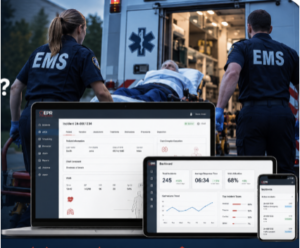
EMS software continues to evolve with AI, predictive analytics, operational intelligence dashboards, voice dictation, and deeper integration across Fire and EMS workflows.
Agencies investing in connected data today will be better positioned to improve patient care, support decision-making, and adapt to future reporting requirements.
Frequently Asked Questions
What is EMS software?
EMS software helps emergency medical agencies manage patient care documentation, scheduling, dispatch integration, reporting, compliance, and analytics.
Is EMS software the same as ePCR?
No. ePCR is one component of a complete EMS software platform.
Does EMS software integrate with CAD?
Most modern EMS software platforms integrate with Computer-Aided Dispatch systems to reduce duplicate documentation.
Why should Fire departments use integrated Fire and EMS software?
Integrated platforms improve reporting accuracy, reduce duplicate entry, and provide leadership with one operational view of department performance.
Final Thoughts
Modern EMS software is no longer just a tool for documenting patient care.
It has become the operational backbone of many Fire and EMS agencies, connecting scheduling, dispatch, patient care reporting, compliance, analytics, and operational intelligence into one configurable platform.
Agencies that invest in connected EMS software spend less time managing paperwork, reduce documentation errors, improve reporting accuracy, and gain the visibility needed to make smarter operational decisions.
If your department is evaluating ways to simplify EMS reporting while improving operational insight, EPR Fireworks’ integrated Fire and EMS Records Management System provides a connected platform designed to help responders document care more efficiently while giving leadership the information they need to make confident decisions.