
6 min read · Updated
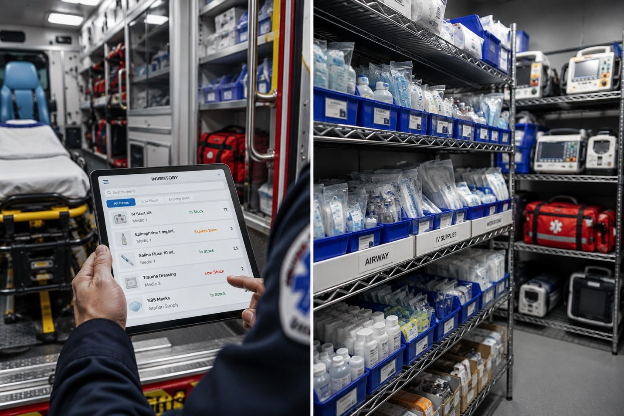
- Weak EMS inventory management is a readiness, budget and patient care problem, not just paperwork.
- Start with standard par levels, expiration tracking and real usage data instead of ordering habits.
- Track durable equipment and its maintenance alongside consumables, so “owned” and “ready for service” are not confused.
- Purpose-built inventory software connected to the rest of your Fire and EMS platform beats shared spreadsheets.
A missing IV kit or an expired medication does not always show up on anyone’s radar until a crew needs it. That is the real cost of weak EMS inventory management. It is not just an administrative problem. It can become a readiness, budgeting and patient care problem.
EMS agencies manage hundreds or thousands of supplies across stations, ambulances, apparatus, storage rooms and response bags. Add expiration dates, equipment maintenance, changing call volumes, supply chain delays and rising costs, and inventory gets hard to manage quickly. For agencies still relying on clipboards, manual counts or shared spreadsheets, improving starts with one thing: better visibility.
Why Does EMS Inventory Management Deserve More Attention?
Every unit that leaves the station understocked, every expired item found too late and every hour a medic spends counting supplies is a cost to the agency.
Inventory never stands still. Supplies are used on calls, equipment moves between apparatus, medications expire, items go out for maintenance, shipments arrive and crews restock. Without a central process, it is hard to know exactly what the department has and where it is.
Good EMS inventory tracking lets leadership answer more useful questions than “Do we have enough?”:
- What do we have, and where is it?
- What are crews using most?
- What needs to be reordered?
- What is close to expiring?
- What equipment needs inspection or maintenance?
- Is every station and apparatus stocked correctly?
How Can Your Agency Improve EMS Inventory Management?
1. Standardize par levels across units and stations
Every ambulance, apparatus and response bag should have a defined standard for what it carries. Without par levels, restocking drifts: one unit carries far more of a supply while another keeps running short.
Set minimum and preferred quantities for frequently used supplies and apply them consistently across similar units. Routine checks get faster, shortages are easier to spot, and leadership gets a clearer sense of how much inventory the department actually needs.
2. Track expiration dates actively
Expired medications and supplies are among the most preventable kinds of waste. A first-in, first-out process helps, but it works much better when you can see expiration dates ahead of time. Items nearing expiration can be moved to busier units where they are more likely to be used, instead of being found during a cabinet check.
That helps:
- Reduce expired inventory and replacement costs
- Keep medications and supplies ready
- Cut manual expiration checks
- Build accountability across stations
3. Use actual usage data to set stock levels
Many agencies set inventory levels based on what they have always ordered, not what crews actually use. Usage data is a better foundation. A high-volume unit may need far more of a supply than a slower one. Stocking both the same creates shortages in one place and excess in another.
Over time, EMS inventory management software can show these patterns and support purchasing, distribution and budget decisions.
4. Account for supplier lead times and disruptions
A product that normally arrives in three days can suddenly take weeks because of shortages, shipping problems or demand. Identify your critical supplies, know their typical lead times and line up backup sources where needed.
This is especially important when setting safety stock. The goal is not to stockpile everything. It is to keep enough on hand to stay ready without tying up budget in products that may expire first.
5. Restock strategically, not just more
More inventory does not mean better preparedness. Overstocking brings expired products, crowded storage, wasted money and supplies that are hard to find. Smaller, more frequent replenishment can keep the right stock with less excess. The right approach depends on call volume, lead times, storage space and the supplies involved. Base the decision on data, not habit.
6. Move beyond spreadsheets
Spreadsheets are familiar and cheap, but they only show what someone entered at the last count. Supplies may have been used, transferred or replaced since then without the file changing.
Purpose-built EMS inventory management software centralizes inventory information and gives every station the same process. EPR Fireworks Equipment and Logistics is built for this in fire and EMS operations.
Fireworks Equipment and Logistics
Know What You Have and What Is Ready
Inventory, equipment, inspections and maintenance in the same platform as your Fire and EMS records.
Is EMS Inventory Management Only About Consumable Supplies?
No. Medications, IV supplies, gauze and airway equipment are only part of it. Departments also manage durable equipment such as:
- Cardiac monitors
- Stretchers
- Radios
- SCBA and PPE
- Rescue equipment
- Apparatus-mounted equipment
For each item, you need to know where it is assigned, whether it is in service, when it was inspected and when maintenance is due.
7. Connect inventory with equipment maintenance
A piece of equipment can be “in inventory” and still not be usable because it needs inspection or repair. Linking inventory with inventory and maintenance workflows helps departments tell the difference between equipment they own and equipment that is ready for service.
8. Make the process easy for crews
The best inventory process is the one crews actually use. If logging a supply change takes too many steps, people put it off, and the data stops being reliable. When evaluating software, ask: Can crews record activity quickly? Can they see what needs attention? Does it fit into existing rig checks? Technology should remove work from crews, not add it.
Do Fire Departments Face the Same Inventory Challenges?
Yes. PPE, SCBA, hose, tools, rescue equipment and apparatus-mounted equipment all need to be tracked, inspected, maintained and eventually replaced. Across several stations and apparatus, that can mean thousands of assets.
Instead of separate systems for EMS supplies, fire equipment, apparatus and maintenance, combined departments can manage them together. Inventory then becomes part of the department’s overall readiness picture, alongside incident and patient care records, instead of a standalone task.
What Should You Look for in EMS Inventory Management Software?
Not every inventory platform is built for emergency services. Look for:
- Central inventory visibility across the department
- Organization by station, apparatus and bag
- Tracking for both consumables and durable equipment
- Expiration management
- Inspection history
- Preventive maintenance and work orders
- Equipment assignments
- Reporting and history
- Configurable workflows
- Connection to your broader Fire and EMS platform
How Does Inventory Data Become Operational Insight?
Over time, inventory data shows how the department really operates. Which items keep running low? Which stations use the most? Where does inventory keep expiring? Which equipment needs frequent repair? Do purchases match real demand? Those answers help leadership with purchasing, budgeting, replacement planning and resource allocation.
Frequently Asked Questions About EMS Inventory Management
What is EMS inventory management?
The process of tracking the supplies, medications and equipment an EMS agency carries and stores, including quantities, locations, expiration dates and maintenance.
What are par levels in EMS?
The defined minimum and preferred quantity of each item a unit, station or bag should carry. They make checks faster and shortages obvious.
How can EMS agencies reduce expired supplies?
Track expiration dates, rotate stock first-in, first-out, and move items nearing expiration to busier units.
What is the best EMS inventory management software?
One built for emergency services that tracks consumables and durable equipment, manages expirations and maintenance, is easy for crews to use, and connects to your Fire and EMS records.
Better EMS Inventory Management Supports Better Readiness
Better inventory management does not require more supplies, a bigger budget or more staff. It requires knowing what you have, where it is, how fast it is used and what needs attention. With standard par levels, expiration tracking, usage data, equipment maintenance and purpose-built software, crews can trust that what they need will be on the truck when the next call comes in.
Ready for the Call
See Fireworks Equipment and Logistics in Action
Free 30-minute call, no obligation, questions answered by a product expert.