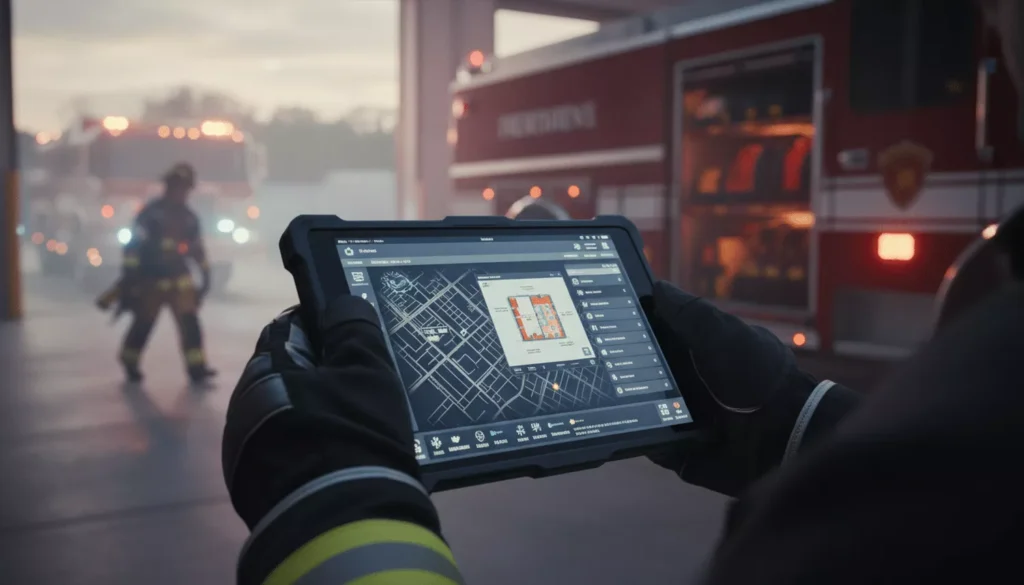
Looking for a Fire Department RMS that can simplify reporting, improve data accuracy, and help your crews stay focused on protecting the community? EPR Fireworks delivers an integrated Fire and EMS Records Management System that connects incident reporting, ePCR, inspections, training, analytics, and compliance in a single platform. Contact our team to learn more.
In This Guide
- Why Choosing the Right Fire Department RMS Matters
- 8 Capabilities Every Modern Fire Department RMS Should Include
- Questions to Ask Every Fire RMS Software Vendor
- Red Flags to Watch for When Comparing Fire Department RMS Software
- How EPR Fireworks Approaches Records Management
- Frequently Asked Questions
- Final Thoughts
Why Choosing the Right Fire Department RMS Matters
Fire departments are under increasing pressure to do more with fewer resources. Agencies must manage incident reporting, EMS documentation, inspections, training records, compliance requirements, and operational analytics while maintaining fast and effective emergency response.
At the same time, the fire service is transitioning from NFIRS to the National Emergency Response Information System (NERIS), creating new expectations for reporting, interoperability, and data quality. Departments need technology that not only supports current operations but also prepares them for future reporting requirements.
The best fire department RMS software does more than store records. It becomes the operational backbone of the organization, connecting data, personnel, assets, and reporting workflows in one place.
Whether you are evaluating your first fire RMS or replacing an outdated system, understanding the capabilities that matter most can help your agency make a more informed decision.
8 Capabilities Every Modern Fire Department RMS Should Include
1. NERIS Readiness
The transition from NFIRS to NERIS is one of the most significant changes facing the fire service today.
NERIS is designed to modernize fire and emergency response reporting through a cloud-based architecture that improves interoperability, analytics, and reporting flexibility. Departments selecting a fire department RMS today should ensure their vendor has a clear NERIS strategy and ongoing compliance roadmap.
Look for:
-
- NERIS-compatible reporting workflows
- Automated validation tools
- Simplified narrative creation
- Future-ready reporting architecture
- Ongoing regulatory support
A fire department RMS software platform that is not prepared for NERIS may create unnecessary challenges in the future.
2. Unified Fire and EMS Reporting
Many departments still operate separate systems for Fire and EMS documentation.
Modern fire and EMS RMS software should eliminate these silos.
An integrated platform allows agencies to manage:
-
- Incident reporting
- ePCR documentation
- NEMSIS 3.5 compliance
- Personnel activity
When Fire and EMS operate within a single database, departments gain better visibility while reducing duplicate data entry and reporting inconsistencies.
For agencies seeking an EMS RMS solution, integration is often more valuable than adding another stand-alone application.
3. Mobile-First Operations
Today’s firefighters, inspectors, and EMS personnel work in the field, not behind a desk.
The best fire RMS software supports operational workflows wherever personnel are working.
Key capabilities include:
-
- Mobile incident reporting
- Field inspections
- Mobile preplan access
- Apparatus-based workflows
- Offline functionality
Mobile-first design helps crews document information in real time while improving efficiency and reducing administrative burden.
4. AI-Powered Documentation
Documentation requirements continue to increase across Fire and EMS.
Artificial intelligence is helping departments reduce reporting burdens while improving consistency and accuracy.
Modern fire department RMS software should support:
-
- AI-assisted narratives
- Automated report generation
- QA/QC assistance
- Workflow automation
- Faster documentation completion
The goal is not replacing personnel. The goal is helping firefighters, inspectors, and EMS professionals spend less time writing reports and more time serving their communities.
EPR Fireworks incorporates AI-powered narrative tools and quality review capabilities designed to streamline documentation workflows.
5. Location Intelligence and GIS Mapping
Data becomes significantly more valuable when departments can see where events occur. As ESRI notes, “When we visualize and analyze data on a map, hidden connections and insights emerge.”
Location intelligence helps agencies answer critical questions:
-
- Where are incidents occurring most frequently?
- Which areas experience slower response times?
- Where should prevention resources be focused?
- What occupancies represent the highest risk?
Modern GIS capabilities support:
-
- Property management
- Preplans
- Hydrant mapping
- Response coverage analysis
- Community risk reduction initiatives
EPR Fireworks integrates with ESRI technology to provide advanced mapping and geographic visibility for operational decision-making.
6. Analytics and Dashboards
Data collection alone does not improve performance.
Leadership teams need visibility into operational trends and performance indicators.
Modern fire department RMS software should include:
-
- Role-based dashboards
- Response time analytics
- Incident trend analysis
- Resource utilization reporting
- Operational performance metrics
Analytics allow leadership to make informed decisions about staffing, deployment, prevention efforts, and resource allocation.
EPR Fireworks provides customizable dashboards that allow command staff, prevention teams, and EMS leaders to access the information most relevant to their responsibilities.
7. Training and Compliance Management
Training documentation remains a challenge for many agencies.
Departments need reliable systems to track:
-
- Certifications
- Continuing education
- Skills verification
- Compliance requirements
- Training completion records
An integrated Learning Management System helps departments maintain readiness while simplifying accreditation and compliance efforts.
EPR Fireworks includes a built-in LMS designed to support firefighter and EMS training programs while improving documentation and accountability.
8. Configurability and Support
No two departments operate exactly the same way.
The best fire department RMS software should adapt to agency workflows rather than forcing agencies to adapt to software limitations.
Look for vendors that provide:
-
- Configurable workflows
- Custom forms
- Flexible reporting
- Department-specific settings
- Dedicated customer support
Technology alone does not guarantee success. Long-term vendor partnership and support often determine whether an implementation succeeds or fails.
Questions to Ask Every Fire RMS Software Vendor
Before selecting a vendor, ask these questions:
-
Is the Platform NERIS-Ready?
Ask for a detailed explanation of how the system supports NERIS reporting and future regulatory updates.
-
Can Fire and EMS Operate Within the Same Platform?
Integrated systems improve efficiency and reduce duplicate work.
-
How Configurable Is the Software?
Departments should be able to customize workflows, forms, and reporting processes.
-
What Integrations Are Available?
Ask about integrations with:
-
- CAD systems
- GIS platforms
- Cardiac monitors
- Scheduling systems
-
What Support Is Included?
A successful implementation should include:
-
- Data migration assistance
- User training
- Dedicated support resources
- Ongoing customer success services
Red Flags to Watch for When Comparing Fire Department RMS Software
Watch for these common warning signs:
-
Separate Fire and EMS Platforms
Disconnected systems often create reporting inconsistencies and duplicate work.
-
Limited Mobile Functionality
Personnel should not have to return to the station to complete routine documentation.
-
Weak Analytics
Departments need access to actionable operational data.
-
Expensive Add-On Modules
Critical functionality should not require multiple additional products.
-
Limited Customization
Rigid systems often create frustration and poor user adoption.
-
Generic Customer Support
Strong support becomes essential when operational systems are involved.
How EPR Fireworks Approaches Records Management
EPR Fireworks was built around a simple idea: Fire and EMS agencies should not need multiple disconnected systems to manage their operations.
Our integrated Fire and EMS RMS software connects:
- Incident reporting
- NERIS compliance
- ePCR documentation
- Inspections and preplans
- Hydrant management
- Training records
- Asset management
- Analytics and dashboards
Departments benefit from a single source of truth while reducing administrative workload and improving operational visibility. The platform is designed to support agencies ranging from single-station departments to large multi-station organizations through configurable workflows, advanced reporting capabilities, and dedicated U.S.-based support.
Frequently Asked Questions
Why Is NFIRS Being Replaced?
NFIRS has served the fire service for decades but has been criticized for being outdated and difficult to use. NERIS is designed to provide a more modern, flexible reporting framework for fire, EMS, and all-hazard incidents.
What Is the Difference Between NFIRS and NERIS?
NERIS provides improved interoperability, better analytics, cloud-based architecture, and more flexible reporting capabilities compared to NFIRS.
Can Fire and EMS Use the Same RMS?
Yes. Many agencies now use fire and EMS RMS software platforms that combine incident reporting, ePCR, analytics, inspections, and compliance workflows within a single system.
What Should a Fire Department RMS Include?
At minimum, departments should look for:
- NERIS readiness
- Incident reporting
- EMS documentation
- Mobile access
- Analytics
- Training management
- GIS capabilities
- Configurable workflows
How Much Does Fire Department RMS Software Cost?
Pricing varies based on department size, implementation requirements, support levels, and included functionality. Agencies should evaluate overall value, scalability, and operational benefits rather than focusing solely on licensing costs.
Final Thoughts
The best fire department RMS software does more than manage records. It helps departments improve efficiency, streamline compliance, support decision-making, and prepare for the future of Fire and EMS reporting.
As NERIS adoption accelerates and agencies increasingly rely on data-driven operations, modern fire RMS software will play an even larger role in operational success.
Choosing a platform that supports NERIS readiness, mobile operations, AI-powered documentation, analytics, and integrated Fire and EMS workflows can help position your agency for long-term success.
Ready to learn how EPR Fireworks can help your department simplify reporting, inspections, training, analytics, and compliance? Contact our team to schedule a personalized demonstration today.