07/17/2026 | 7 min read
The Short Answer: Yes, But Not the Way You Think: AI isn’t making fire departments faster by replacing dispatchers; it’s helping them make smarter operational decisions. Learn how modern analytics, NERIS, and AI are helping agencies uncover response-time trends, reduce administrative burden, and improve performance.
In This Article You’ll Learn
- Why response time is more than a compliance metric
- How AI improves operations beyond dispatch
- Real-world examples of AI in Fire & EMS
- Why NERIS is changing operational intelligence
- Practical ways departments can improve response time today
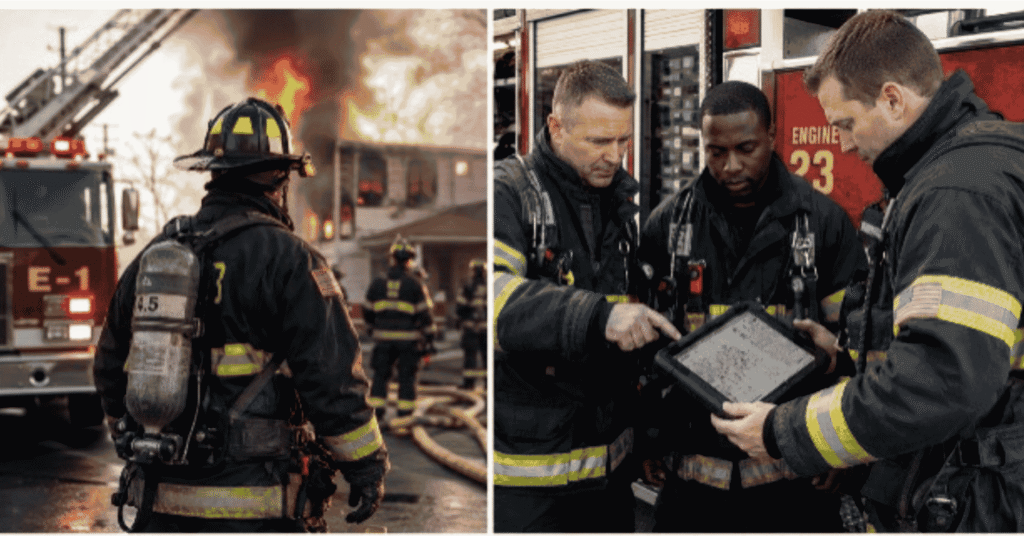
Fire department response time is one of the most important performance metrics in emergency services. Whether it’s a structure fire, a cardiac arrest, or a hazardous materials incident, every second can influence outcomes for responders and the communities they serve. While the average emergency response time varies based on geography, staffing, and call volume, every department shares the same goal: delivering emergency services as quickly and effectively as possible.
For years, agencies have focused on improving fire department response time through station placement, staffing models, apparatus deployment, and dispatch technology. Today, artificial intelligence (AI) is introducing a new opportunity – not by replacing firefighters, paramedics, or dispatchers, but by helping departments make smarter decisions before, during, and after every incident. The conversation is shifting from simply responding faster to operating smarter.
Why Fire Department Response Time Matters
Fire department response time is more than a compliance metric – it reflects an agency’s ability to deliver timely emergency services, protect lives and property, and improve patient outcomes. While geography, staffing, traffic, weather, and call volume all influence response times, agencies increasingly recognize that better operational data can help identifyopportunities for continuous improvement.
Understanding why response times vary allows leaders to make informed decisions about staffing, apparatus deployment, training, community risk reduction, and resource allocation. Improving fire department response time isn’t always about moving faster -it often starts with making better operational decisions.
💡 Key Takeaway: AI isn’t replacing firefighters or dispatchers. It’s helping departments make better operational decisions by transforming everyday data into actionable insights.
How Cities Use Technology to Improve Emergency Response Times
Across the country, agencies are investing in technologies that improve visibility into operations and support faster decision-making. Understanding how cities use technology to improve emergency response times goes far beyond installing new dispatch software.
Modern Fire & EMS agencies are combining cloud-based records management systems, GIS mapping, mobile reporting, and operational analytics to gain a more complete view of their operations. Solutions like Fireworks Analytics & Compliance help leaders identify trends, optimize staffing, improve documentation, and allocate resources through interactive dashboards, reporting, and GIS mapping.
Together, these technologies help agencies continuously evaluate performance and uncover opportunities to improve fire department response time.
AI Is More Than Dispatch
When many people think about AI in public safety, they picture autonomous dispatch or predictive emergency response. While research continues to explore those applications, the greatest value departments can realize today comes from something much closer to home: the operational data they already collect every day.
Every incident report, inspection, training record, and EMS call tells part of the story of how an agency operates. Until recently, most of that information has been used primarily for compliance and reporting.
AI has the potential to change that.
Instead of simply storing data, modern records management systems can transform operational information into actionable insights through real-time analytics and reporting. When departments have access to accurate operational intelligence, they can identify patterns, reduce administrative burden, and support better decision-making across the organization. Better decisions ultimately contribute to stronger operational performance -and over time, can positively influence fire department response time. Learn more about AI for Fire & EMS.
💡 Key Takeaway: The greatest opportunity for AI today isn’t autonomous dispatch; it’s helping departments unlock value from the incident, inspection, training, and EMS data they already collect.
Where AI Is Delivering Value Today
Smarter Incident Documentation
Documentation is one of the most time-consuming responsibilities in Fire & EMS.
AI for Fire & EMS can assist responders by helping organize incident narratives, improve report quality, identify missing information, and validate documentation before reports are submitted. Rather than replacing the responder’s expertise, AI serves as an intelligent assistant that helps improve consistency while reducing administrative workload.
As reporting requirements evolve – particularly with the transition to NERIS – these capabilities become increasingly valuable.
Turning Data Into Operational Intelligence
Fire departments generate an enormous amount of information, but finding meaningful trends across thousands of incidents can be difficult.
- Where are response times consistently increasing?
- Which incident types are becoming more common?
- Are staffing models aligned with demand?
- Which apparatus experience the highest utilization?
- Are inspections reducing repeat incidents?
- What trends should command staff be monitoring?
Instead of relying solely on static reports, agencies can leverage Fireworks AI for Fire & EMS AI Playground to uncover trends, monitor performance, and support strategic planning. These insights help departments understand the factors affecting fire department response time and identify opportunities for improvement.
💡 Key Takeaway: AI doesn’t just generate reports; it helps leaders identify trends, ask better questions, and make data-driven decisions that improve operational performance over time.
What the Research Shows
Research into fire and EMS operations continues to demonstrate the value of data-driven decision-making. From studies examining emergency response times for paramedics to machine learning models designed to optimize dispatch recommendations, researchers consistently find that agencies can improve operational performance by making better use of historical incident data.
Studies have demonstrated promising results in:
- Predicting emergency call demand
- Optimizing ambulance routing
- Improving dispatch recommendations
- Identifying high-risk properties for fire prevention
- Supporting EMS triage decisions
One recent fire alarm response time study found that machine learning models were able to recommend dispatch strategies that reduced average response times in simulated emergency scenarios. While many of these findings come from pilot programs or single-agency deployments, they reinforce the growing role AI may play in helping departments improve operational performance.
“The future of AI in Fire & EMS isn’t about replacing people; it’s about empowering them with better information.”
Why NERIS Changes the Conversation
The transition to the National Emergency Response Information System (NERIS) represents more than a new reporting standard.
It creates an opportunity for agencies to collect richer, more consistent operational data than ever before.
As departments modernize their records management systems, they’re building the foundation for AI-powered operational intelligence. Fireworks Analytics & Compliance helps agencies transform standardized operational data into dashboards, GIS mapping, compliance reporting, and actionable insights that support smarter decision-making.
As agencies collect richer operational data through NERIS, they are building the foundation for future technologies that can support both strategic planning and continuous improvements in fire department response time.
💡 Key Takeaway: NERIS isn’t just a new reporting requirement. It’s creating standardized, higher-quality data that enables better analytics, stronger operational intelligence, and future AI capabilities.
Looking Ahead
Improving fire department response time will always depend on skilled firefighters, effective leadership, and well-trained dispatchers. AI isn’t replacing those professionals, it’s giving them better information to make faster, more informed decisions. As more agencies explore how cities use technology to improve emergency response times, the focus is shifting from isolated tools to connected operational intelligence that supports every aspect of emergency response.
The future of AI in Fire & EMS isn’t about replacing people, it’s about empowering them.
At Fireworks, we believe the future of public safety is built on trusted data, modern records management, and actionable operational intelligence. Through Fireworks Analytics & Compliance, agencies can access dashboards, business intelligence, GIS mapping, and reporting tools that help turn operational data into informed action.
Based on our experience working with AI for Fire & EMS agencies across North America, one of the biggest opportunities isn’t dispatch—it’s helping leaders connect incident reporting, inspections, training, and analytics into a single operational picture. When departments can trust their data, they can identify trends sooner, make more informed decisions, and continuously improve operational performance.
Our mission is to help Fire & EMS agencies move beyond compliance reporting and transform operational data into insights that improve performance, strengthen decision-making, and better serve the communities that depend on them.
Ready to unlock the full value of your operational data?
Learn how Fireworks AI is helping Fire & EMS agencies improve operational performance, move beyond compliance reporting, prepare for NERIS, and build the data foundation that supports better decision-making, including continuous improvements in fire department response time.