NERIS Was a Big Change. You Shouldn't Have to Face It Alone.
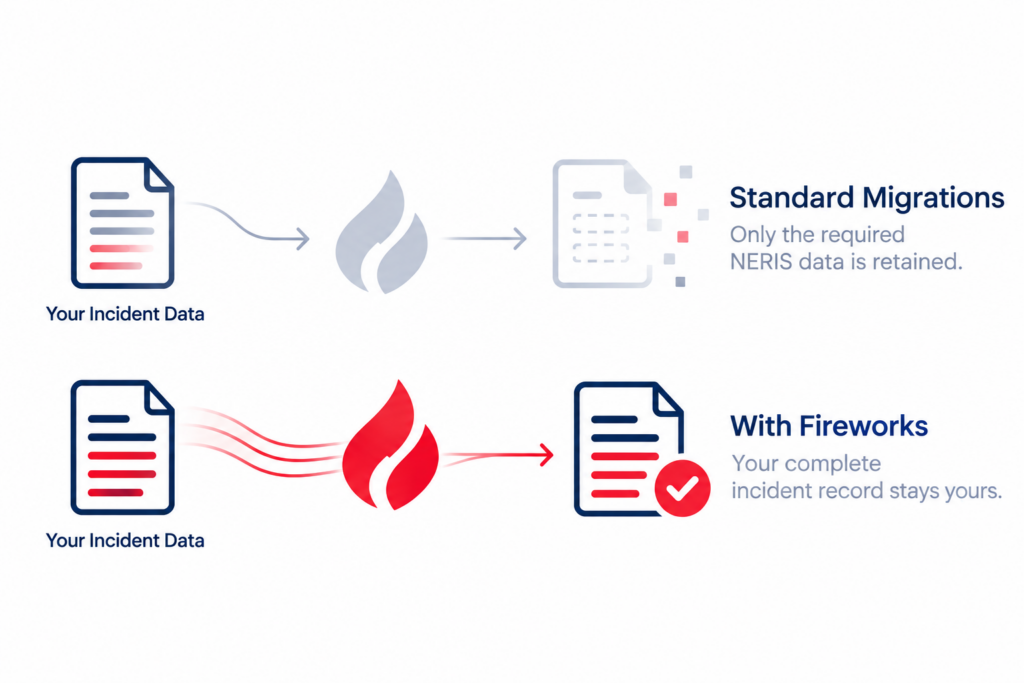
NERIS reshaped fire and EMS reporting almost overnight, and a change that size deserves a real partner. EPR Fireworks migrates your complete historical data, so your reporting record stays intact, backed by implementation and support built to make the switch easy.
And we're not chasing an "AI-powered" label. EPR Fireworks gives your crews real intelligence: tools that turn incident data into decisions your team can act on.
Better data. Easier transition. People who actually answer the phone.
On-Demand Webinar
Your NERIS data can do more than check a box, it can drive operational intelligence.
Lessons learned from the first six months of NERIS, and what comes next.
Features and Benefits of NERIS Incident Reporting Software
NFIRS 5.0-Compliant Incident Reporting.
Simplifies reporting and compliance, allowing your team to focus on operational excellence instead of paperwork.
Pre-Incident Planning
Provides instant access to critical data like hydrants, Knox Boxes, and FDC connections helping you make informed tactical decisions in the field.
CAD Integration: Keep Your Incident Response Team in Sync
EPR Fireworks integrates directly with computer aided dispatch systems, pulling CAD data into your incident record automatically.
That integration doesn’t merely save time. It also gives chiefs and incident commanders the incident data they need to evaluate incident response capabilities, identify gaps, and make informed decisions about staffing, deployment, and training.
Enhance Regional Response Coordination
Streamlines coordination with other fire stations and agencies, ensuring your station is always positioned as a reliable regional leader.
HAZMAT Incident Management Module and Hazard Area Tracking
Handling hazardous materials incidents requires precision and coordination. Your station’s ability to assess risks and implement the right safety protocols sets the standard for operational excellence.
Equip your team with the tools to assess risks, track hazardous materials, and execute response strategies with confidence.
NFPA 921 Investigations Module
Supports thorough fire investigations and documentation, reinforcing your station’s credibility and expertise.
From Incident Documentation to Operational Intelligence
NERIS was a big shift. Now comes the opportunity.
Moving from NFIRS to NERIS changed more than the reporting standard. It changed what fire departments can do with their incident data.
Fireworks has helped departments navigate the transition to NERIS reporting with a partner by their side. Now, we’re helping agencies take the next step: improving data quality, creating greater visibility, and turning NERIS data into operational intelligence that can inform real decisions.
Moving to NERIS shouldn’t mean leaving valuable department data behind.
Fireworks helps you bringyourhistoricalincidentdataforward while giving you the flexibility to capture what matters to your agency.
Customizablefields work alongside required NERIS data, so you can meet the reporting standard without giving up the information your department relies on.
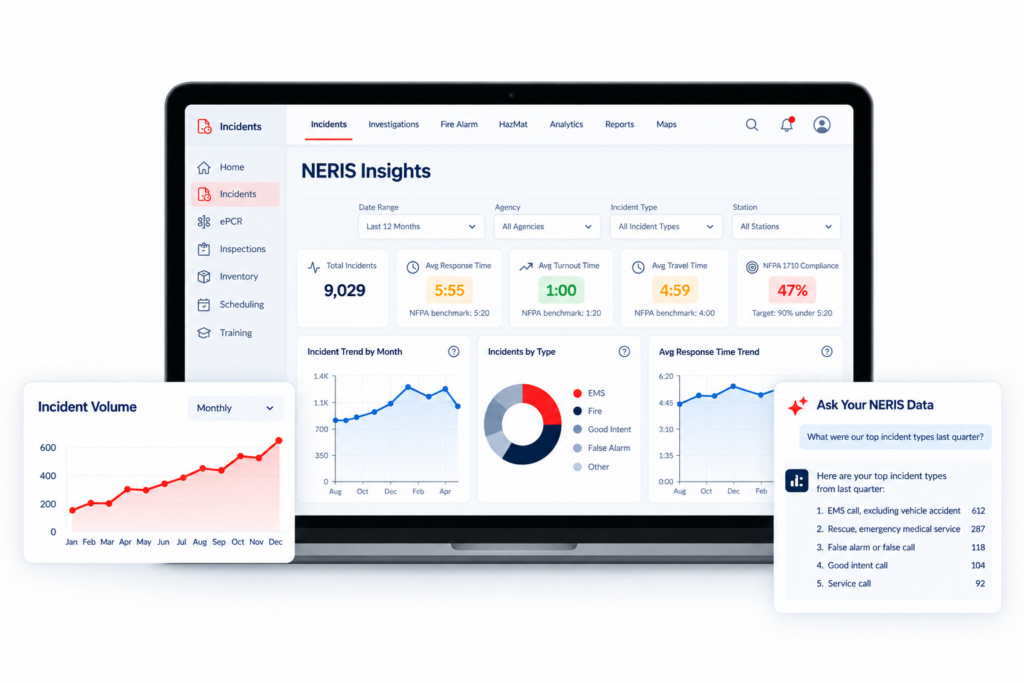
Your NERIS software should tell you something.
Compliance gets the data in. Fireworks helps you get more out of it.
Explore response trends, incident volume, geography, performance and other operational patterns using the data your crews already capture.
With NERIS Insights, dashboards and business intelligence tools, departments can turn incident reporting data into information leaders can actually use.
What Agencies Are Saying
Real departments, real results.
"One Integrated System. Real Insights."
Fire Chief Chris WolfeGrand Naples Fire Rescue (FL)
"All-in-One Fire Software That's Backed by Real Support."
Captain Bryan ForbessPleasant Garden Fire Department
"We Switched to EPR — And It Just Worked."
Battalion Chief Mark LoucksMidland Fire Department
Your data is already telling a story.
Fireworks helps you use it.
From incident response and NERIS reporting to operational intelligence, Fireworks gives your department one connected platform backed by a partner who understands the work.