
Key Takeaways
Consolidating your department’s technology into a single platform eliminates the operational inefficiencies that cost you time, money, and potentially lives.
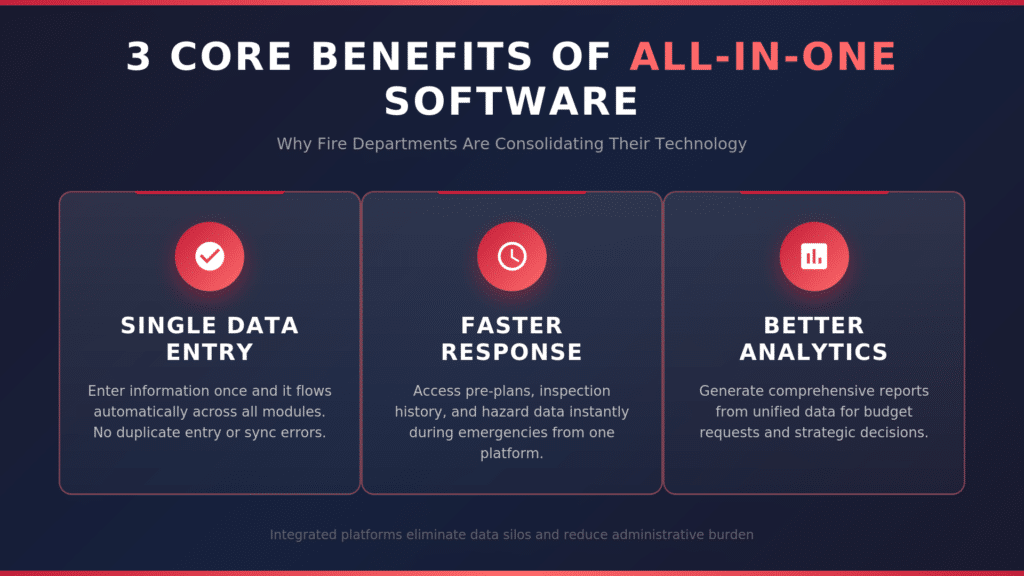
- Departments using integrated platforms report eliminating duplicate data entry and synchronization headaches across disconnected systems
- The fire department software market reached $1.42 billion in 2024, with cloud-based solutions now driving adoption due to scalability and remote access capabilities
- All-in-one systems connect incident reporting, inspections, training, scheduling, and compliance into a unified database that actually communicates with itself
- With NFIRS sunsetting in February 2026, departments must transition to NERIS-compatible systems that support enhanced data collection and real-time analytics
Evaluate your current technology stack now to ensure seamless NERIS compliance while positioning your department for data-driven decision making.
Fire departments across the country face the same frustrating reality: too many systems that refuse to talk to each other. One application handles incident reporting, another manages scheduling, a third tracks training certifications, and somehow your team is expected to make everything work together. The administrative burden on fire departments continues growing each year, and fragmented technology creates dangerous gaps exactly when seconds matter most.
All-in-one fire department software represents a fundamental shift in how departments manage operations. Rather than cobbling together separate applications and hoping they integrate properly, comprehensive platforms consolidate every critical function into a single database.
The result is streamlined workflows, eliminated duplicate entry, and instant access to information that previously required switching between multiple systems. According to recent market analysis, the fire department software market reached $1.42 billion in 2024 and is anticipated to grow at a compound annual growth rate of 10.9% through 2032, reflecting the accelerating shift toward integrated solutions.

What Makes All-in-One Fire Department Software Different From Modular Systems?
The core distinction comes down to architecture and data flow. Modular systems require you to select specialized applications for specific functions and connect them through integrations. You start with one critical need, add capabilities as budget allows, and hope everything synchronizes correctly. The reality rarely matches that expectation.
All-in-one fire department software puts everything under one roof. Incident reporting, personnel management, equipment tracking, inspections, training records, and analytics all live in a single database that communicates internally. When your inspector updates a violation during a site visit, that information instantly appears in pre-plans, incident records, and dispatch screens.
How Data Integration Creates Operational Advantages
Consider what happens when your crew responds to a commercial building fire using disconnected systems. Someone needs to pull up inspection records in one application, check incident history in another, review building pre-plans in a third, and locate emergency contacts somewhere else entirely. With integrated RMS solutions, one click reveals the most recent safety inspection, any code violations that might affect tactics, the sprinkler system layout, and emergency contacts. This integration becomes invaluable when seconds count during emergency response.
The differences extend beyond convenience into measurable operational improvements. Fire departments using unified platforms eliminate the hours spent reconciling data across systems, reduce errors caused by manual re-entry, and gain confidence that everyone works from the same accurate information.
| Factor | Modular Systems | All-in-One Platforms |
| Data Entry | Duplicate entry across applications | Single entry, automatic sync |
| Integration | Requires technical expertise | Built-in connectivity |
| Vendor Management | Multiple relationships | Single point of contact |
| Training Requirements | Separate training per system | Unified training approach |
| Data Consistency | Synchronization challenges | Real-time accuracy |
| Total Cost Over Time | Hidden integration costs | Predictable expenses |

How Does Integrated RMS Improve Daily Operations?
Effective fire department management software addresses every operational area through connected modules. Each module handles specific needs while contributing data to overall system intelligence. This creates a comprehensive view of department operations that fragmented systems simply cannot deliver.
Incident Reporting and Compliance Management
The incident module captures comprehensive information about every emergency response. Fire departments document incident type, location, property characteristics, resources deployed, actions taken, and outcomes. This detailed record-keeping supports immediate operational needs while building the historical data that drives better long-term decision-making.
NFIRS will sunset in February 2026 and will no longer be available, with NERIS becoming the new standard for fire-based, all-hazards incident reporting and analytics. The U.S. Fire Administration reports that over 33.3 million responses to all types of incidents were reported by participating fire departments in 2024, including nearly 1.2 million fire responses. Forward-thinking departments are already preparing their systems for this transition, which brings enhanced data collection capabilities and near real-time analytics.
Personnel and Scheduling Functionality
Managing firefighter schedules, certifications, training requirements, and availability demands sophisticated tracking capabilities. Personnel modules maintain comprehensive records for each team member, including emergency contact information, certification expiration dates, training hours, and exposure tracking for hazardous materials or traumatic incidents.
Automated alerts notify administrators when certifications approach expiration, ensuring continuous compliance without manual calendar management. Advanced scheduling tools recommend shift assignments and identify qualified personnel for specialized responses, saving hours of coordination work that previously fell to battalion chiefs or administrative staff.
Training and Certification Tracking
Education remains an ongoing responsibility for EMS and fire service professionals. Bringing training management into the same platform as other operational functions creates efficiency gains that standalone learning management systems cannot match. Departments can track all activities, certifications, standard operating guidelines, and current recertification requirements for both EMS and fire service roles.
The ability to run tests, set reminders, and perform common learning management functions within the same system eliminates context switching and ensures training records automatically connect to personnel files and compliance reporting.
What Are the Core Benefits of Software Comparison When Evaluating Platforms?
Departments making technology decisions need clear evaluation frameworks. The software comparison process should prioritize factors that directly affect operational outcomes rather than focusing solely on feature checklists or initial costs.
Five Essential Evaluation Criteria for Fire Department Management Software
Data accessibility and mobile functionality. Modern departments need information available anywhere crews operate. Cloud-based platforms with mobile access eliminate redundant data entry while improving accuracy and accessibility across all operational areas. Your team should access critical information from any browser without needing separate mobile applications.
Compliance readiness for NERIS transition. Only vendors awarded the “NERIS V1 Data Exchange Compatible” certification from the Fire Safety Research Institute can guarantee seamless integration and continued compliance after the January 2026 deadline. Verify your provider’s certification status immediately to avoid last-minute system replacements.
Business intelligence and reporting capabilities. Dynamic dashboards and powerful reporting tools should allow instant retrieval from pre-built reports while enabling custom report creation for specific departmental needs. Quality analytics put essential data at your fingertips for better decision-making and operational efficiency.
Integration architecture. Evaluate how the platform connects suppression, prevention, EMS, inspections, training, staffing, and community engagement functions. Seamless internal integration reduces the administrative overhead that pulls your team away from their primary mission.
Implementation support and customer service. Technology is only as good as the support behind it. Investigate vendor stability, customer satisfaction ratings, and the quality of implementation assistance. Departments benefit from partners who understand fire service operations rather than generic software vendors applying standard templates.
How Can All-in-One Fire Department Software Reduce Administrative Burden?
The administrative burden on fire departments continues increasing with no sign of stopping. Tracking incident reports, maintaining equipment inventories, ensuring personnel certifications stay current, and meeting federal reporting requirements creates pressure that grows heavier each year. Integrated platforms transform how departments handle these demands.
Research indicates that departments using comprehensive platforms recover significant time previously lost to administrative tasks. Features like automated compliance tracking, streamlined incident reporting, and centralized record-keeping free your team to focus on training, community engagement, and emergency preparedness rather than chasing paperwork across disconnected systems.
Where Departments Find the Greatest Time Savings
Payroll integration eliminates duplicate work when scheduling software creates time entries directly from accurate schedules and connects that information to payroll systems. This approach reduces errors while eliminating the manual reconciliation that consumes administrative hours each pay period.
Automated reporting generates compliance documentation, ISO reporting requirements, and FEMA audit materials from data already captured during normal operations. Rather than assembling information from multiple sources before deadlines, departments extract what they need with a few clicks.
Equipment and inventory tracking modules manage quantities and general condition of fire department equipment and apparatus from within the same platform. Maintenance schedules, inspection histories, and replacement timelines all connect to the financial and operational data that supports budget planning.
| Administrative Task | Traditional Approach | Integrated Platform |
| Monthly Reporting | Hours compiling data | Minutes generating reports |
| Certification Tracking | Manual calendar management | Automated alerts |
| Equipment Inspection | Paper checklists, separate logs | Digital records, automatic scheduling |
| NFIRS/NERIS Submission | Manual validation, separate upload | Validated submission built-in |
| Payroll Processing | Reconcile multiple systems | Direct schedule integration |
What Should Departments Consider About Properties and Inspection Management?
Keeping up-to-date information on inspections, pre-plans, and properties in a unified platform creates advantages that extend far beyond administrative convenience. The properties module connects directly to incident response, ensuring crews have current information about the locations they serve.
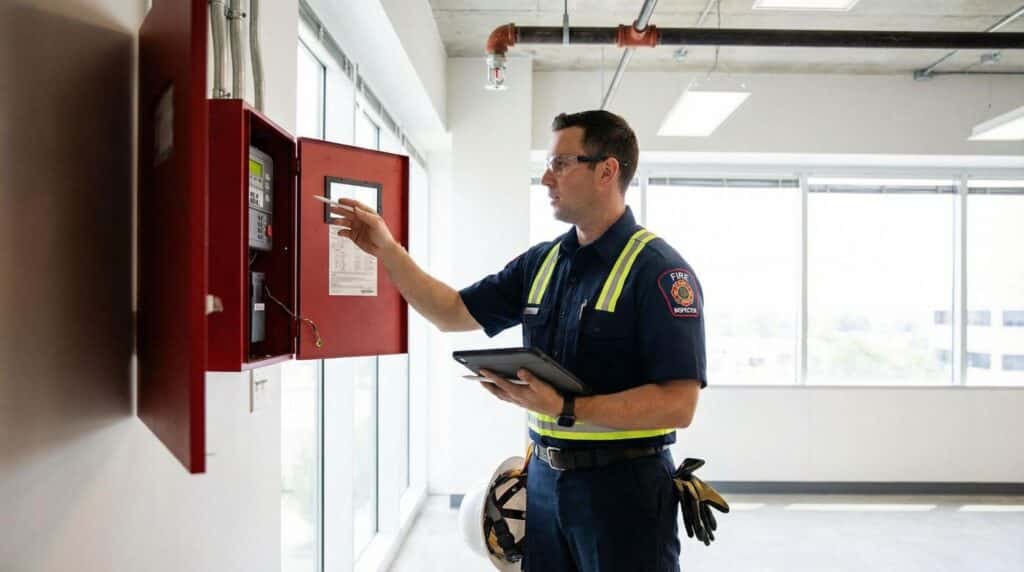
Integrated pre-plan and inspection systems allow crews to conduct pre-plan surveys while certified fire inspectors perform periodic occupancy and business inspections. This ensures that vital data is instantly updated and shared across the department. When a new hazard is identified during an inspection, that information immediately appears for responding crews without requiring someone to manually update separate systems.
The hydrant module provides another example of integration benefits. Access to basic information regarding each hydrant, including location, flow rate, test history, and mapped location, helps crews plan effective responses. Tracking and managing maintenance and flow testing tasks within the same system ensures this critical information stays current.

How Should Departments Approach the All-in-One vs Modular Decision?
Small volunteer departments with straightforward operations may find comprehensive platforms overwhelming. Their limited budgets and staff capacity might be better served by targeted modular solutions addressing the most pressing needs. Large departments managing complex operations across multiple stations often benefit from the integration and standardization that comprehensive fire department management software provides.
Document current pain points, prioritize functions needing improvement, and identify where data integration delivers the greatest value. Engage stakeholders early, including firefighters, administrative staff, fire prevention personnel, and training officers. Their input ensures you select software serving actual operational needs rather than impressive features that go unused.
Evaluate total cost of ownership beyond licensing fees. Consider implementation, ongoing training, maintenance, and potential upgrade costs. The cheapest initial option rarely proves most economical over 10 to 15 years. Demand detailed demonstrations using your actual data and workflows rather than generic presentations designed to impress rather than inform.
Frequently Asked Questions
What is Emergency Services RMS software?
Emergency Services RMS software is a records management system designed specifically for fire and EMS agencies. It centralizes incident reporting, personnel management, training records, equipment tracking, inspections, and compliance documentation in one accessible platform. Modern systems include mobile access, cloud-based deployment, and integration with national reporting standards.
When must fire departments transition to NERIS?
NFIRS will sunset in February 2026, and all departments must transition to NERIS for continued federal reporting compliance. The deadline of January 31, 2026 represents the final date for NFIRS submissions. Departments should verify their current RMS vendor holds NERIS V1 compatible certification and begin transition planning immediately.
How do integrated platforms improve emergency response?
Integrated platforms provide fire and EMS crews instant access to the information they need—property pre-plans, inspection histories, hazard information, hydrant locations, medical protocols, patient history flags, and emergency contacts—all from a single interface. This eliminates the need to search multiple systems during time-critical situations and ensures everyone operates from current, accurate information.
What features should all-in-one fire department software include?
Essential features include incident reporting with NFIRS/NERIS compliance, electronic patient care reporting (ePCR), personnel and scheduling management, training and certification tracking, equipment and inventory management, properties and inspection modules, hydrant tracking, and robust business intelligence reporting. Cloud-based deployment and mobile access have become standard requirements for modern operations.
Take the Next Step Toward Streamlined Operations
The decision between disconnected tools and unified platforms affects every aspect of department operations. From administrative efficiency to emergency response effectiveness, the technology foundation you choose shapes daily outcomes for your team and the community you serve.
Departments ready to eliminate data silos, reduce administrative burden, and prepare for NERIS compliance requirements find that EPR Fireworks delivers the comprehensive solution they need. Designed by firefighters and built by engineers, the platform combines everything you require in a single, accessible system. Connect with the EPR Fireworks team to see how all-in-one fire department software can transform your department’s operations.

