Key Takeaways
Interagency fire department software transforms how neighboring agencies coordinate mutual aid, share critical incident data, and make collective decisions that protect entire regions.
- Modern RMS platforms enable multiple agencies to access shared databases while maintaining appropriate permission levels for sensitive information
- Joint analytics dashboards reveal regional patterns that individual departments cannot see in isolation
- Multi-agency fire reporting eliminates duplicate data entry and creates unified records for incidents involving multiple jurisdictions
- Cloud-based systems with RMS interoperability prepare departments for upcoming NERIS compliance requirements that emphasize standardized data sharing
Fire service leaders evaluating technology should prioritize platforms designed from the ground up for multi-agency collaboration.
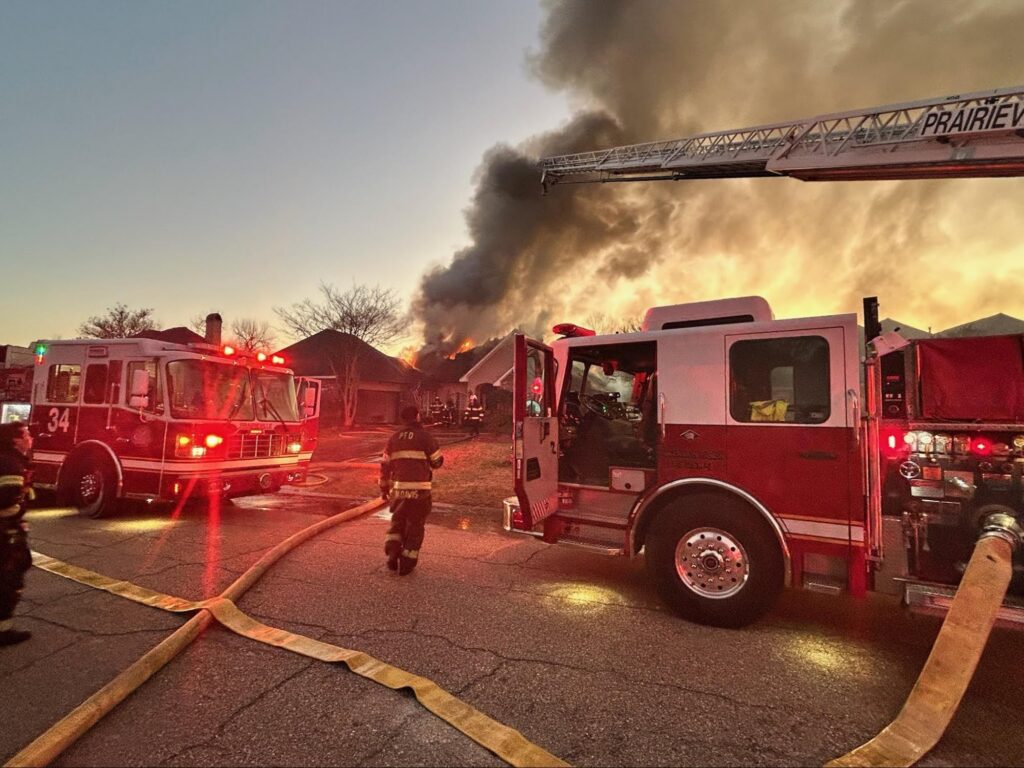
When a structure fire spreads beyond your jurisdiction or a mass casualty incident requires resources from multiple departments, the last thing anyone needs is a technology barrier. Yet that’s exactly what happens when neighboring agencies operate incompatible systems that can’t share information in real time.
The fire service has always been built on mutual aid. Departments have helped each other for generations, long before computers entered the picture. But modern incident complexity demands more than radio communication and handshake agreements. According to the International Association of Fire Chiefs, regional coordination has become essential as departments face increased call volumes, staffing challenges, and larger-scale incidents that routinely cross jurisdictional boundaries. Fire department records management has evolved to meet these challenges, with collaborative RMS platforms now offering capabilities that were unimaginable just a decade ago.
What Makes Interagency Fire Department Software Different?
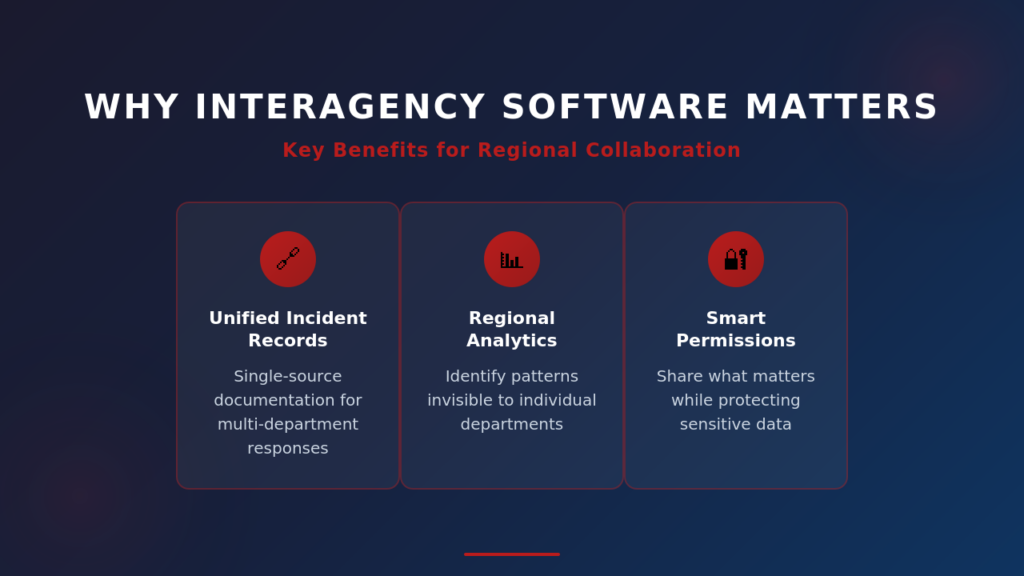
Standard RMS platforms focus on helping individual departments manage their own operations. Multi-agency software takes a fundamentally different approach by building collaboration into the core architecture.
The distinction matters because retrofitting collaboration onto a single-agency system rarely works well. You end up with workarounds, manual data exports, and information silos that defeat the purpose of sharing. Purpose-built multi-agency solutions treat each participating department as part of a larger network while still respecting individual agency autonomy.
Key Architecture Elements
Shared database infrastructure allows participating departments to contribute to and access a common data repository. This doesn’t mean everyone sees everything. Sophisticated permission structures ensure agencies only access information appropriate to their role and relationship with other participating departments.
Multi-tenant cloud platforms have made this approach practical for departments of all sizes. Smaller volunteer departments can participate in regional data sharing without investing in expensive server infrastructure or dedicated IT staff.
How Do Shared Access and Permissions Improve Coordination?
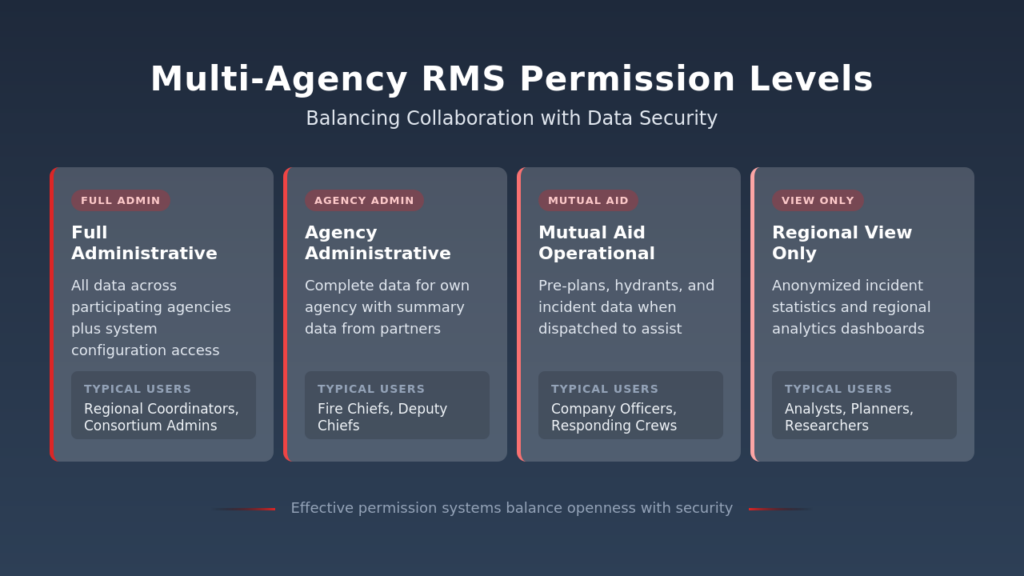
The heart of effective multi-agency RMS lies in its permission system. Getting this right means balancing openness with appropriate security, collaboration with accountability.
Effective shared access typically operates on several levels:
Regional incident visibility allows participating departments to see basic incident information from neighboring jurisdictions. This helps with situational awareness and resource planning.
Mutual aid access provides responding units with detailed information when they’re dispatched to assist another agency. Pre-plans, hydrant locations, and hazmat storage information become available to crews who may be unfamiliar with the area.
Administrative sharing enables regional fire chiefs and planners to analyze combined data sets for strategic planning, grant applications, and resource allocation decisions.
| Permission Level | What Users Can Access | Typical Users |
| Full Administrative | All data across participating agencies, system configuration | Regional coordinators, consortium administrators |
| Agency Administrative | Complete data for own agency, summary data from partners | Fire chiefs, deputy chiefs |
| Mutual Aid Operational | Pre-plans, hydrants, and incident data when dispatched | Company officers, responding crews |
| Regional View Only | Anonymized incident statistics, regional dashboards | Analysts, planners, researchers |
The most effective systems also provide granular permission controls that let each agency decide exactly what they share and with whom. A department might share pre-plan information freely while restricting access to personnel records or ongoing investigations.
What Role Does Multi-Agency Fire Reporting Play?
Incidents involving multiple departments create immediate documentation challenges. Who owns the incident record? How do you avoid duplicate entries? How do you ensure everyone’s contributions get captured accurately?
Multi-agency fire reporting features address these challenges systematically. When multiple departments respond to the same incident, the RMS creates a single unified record that all participating agencies can contribute to and access.
This matters enormously for compliance. The U.S. Fire Administration collects incident data through state systems, and duplicate or conflicting reports create problems for both departments and the agencies analyzing the data. NERIS, which is replacing NFIRS this year, places even greater emphasis on data standardization and makes multi-agency fire reporting capabilities increasingly critical.
Benefits of Unified Incident Records
Creating single-source records for multi-agency incidents provides several advantages beyond compliance:
Accurate resource tracking becomes possible when all responding units document their participation in one record. This data proves invaluable for cost recovery, mutual aid billing, and grant reporting.
Comprehensive incident narratives emerge when personnel from different agencies can contribute their observations and actions to a shared timeline. The resulting documentation is far richer than any single agency could produce alone.
Post-incident analysis improves dramatically with complete data. Reviewing what happened, what worked, and what needs improvement requires seeing the whole picture, not just fragments from individual departments.
How Do Joint Analytics Reveal Regional Patterns?
Individual departments analyzing their own data see only part of the story. Collaborative RMS platforms with joint analytics capabilities reveals patterns that would otherwise remain invisible.
Consider a scenario where three neighboring departments each experience a modest increase in kitchen fires during certain months. Individually, none might notice the trend as significant. Combined data might reveal a regional pattern worth investigating, perhaps tied to local events, demographic changes, or housing conditions affecting the entire area.
Joint analytics also enable meaningful benchmarking. Comparing your department’s response times, incident outcomes, and operational metrics against similar agencies in your region provides context that raw numbers alone cannot offer.
RMS Interoperability Requirements
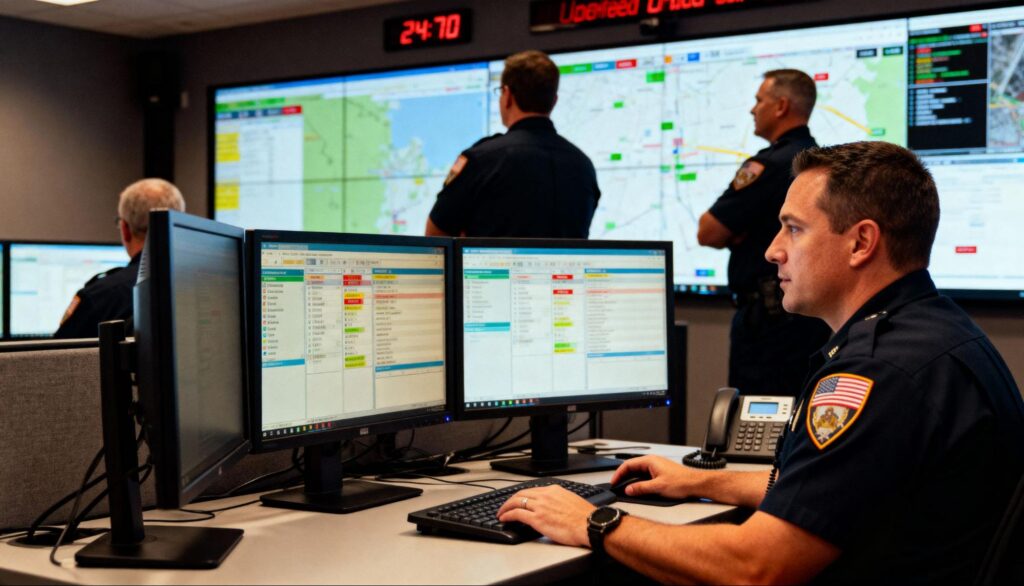
Effective joint analytics require RMS interoperability between participating agencies. This means more than just compatible file formats. True interoperability requires:
Standardized data elements so that an “apparatus” in one system means the same thing in another. NFIRS coding standards provided some commonality, and NERIS establishes even more rigorous definitions.
Real-time or near-real-time synchronization so regional dashboards reflect current conditions rather than yesterday’s data.
Flexible reporting tools that can aggregate data across agencies while still allowing drill-down to individual department details when needed.
API access for departments that want to connect other tools or create custom analyses beyond what standard reports provide.
| Analytics Capability | Single-Agency RMS | Interagency Platform |
| Own department trends | Yes | Yes |
| Regional incident mapping | Limited to own data | Complete regional view |
| Cross-jurisdiction comparison | Manual data gathering required | Automated benchmarking |
| Mutual aid utilization | Partial tracking | Full bidirectional tracking |
| Combined resource planning | Not available | Integrated capacity analysis |
Five Ways Interagency Software Transforms Daily Operations
Understanding capabilities is helpful, but seeing practical applications brings the value into focus. Here are five ways interagency fire department software changes how departments work together:
- Automatic mutual aid documentation eliminates phone calls and faxes to track who responded where. When your unit gets dispatched to help a neighboring department, your participation is automatically recorded in both your records and theirs.
- Shared pre-planning access means your crews can review building information for structures in other jurisdictions while en route. That high-rise across the county line becomes less of an unknown when everyone can access the same pre-plan data.
- Regional training coordination becomes practical when you can see what courses neighboring departments are offering and share certification tracking across agency lines. This matters especially for specialized training in areas like technical rescue or hazmat response.
- Unified community risk data helps departments identify hazards that affect entire regions rather than just individual jurisdictions. Target hazards near municipal boundaries need coordinated response plans regardless of which side of the line they sit on.
- Streamlined grant applications benefit from comprehensive regional data. Federal grants like AFG and SAFER often favor collaborative proposals, and having solid multi-agency data to support your application strengthens your case considerably.
What Should Fire Chiefs Consider When Evaluating Interagency Capabilities?
Not all RMS platforms handle multi-agency collaboration equally well. When evaluating collaborative RMS solutions, fire service leaders should consider several factors beyond basic feature lists.
Questions Worth Asking
How many agencies currently use this platform in your region? Interagency benefits multiply with participation. A system that none of your neighbors use, no matter how sophisticated, won’t help you collaborate.
What does onboarding look like for a regional consortium? Getting multiple agencies onto a shared platform requires coordination, training, and change management expertise. Ask vendors about their experience supporting regional implementations.
How do permission changes get managed? As agency relationships evolve and personnel change, you’ll need straightforward ways to adjust who can see what. Overly complex permission management creates security risks and administrative headaches.
What happens to your data if you leave? Participating in a regional consortium shouldn’t mean losing control of your own department’s information. Understand data ownership and portability before committing.
According to Firehouse Magazine, departments increasingly recognize that technology decisions made in isolation limit future collaboration possibilities. Regional planning discussions should include conversations about software compatibility and data sharing standards.
How Does Cloud Technology Enable Multi-Agency Collaboration?
Cloud-based platforms have fundamentally changed what’s possible for interagency fire department software. Before cloud computing became mainstream, sharing data between agencies meant complex server connections, expensive networking equipment, and significant IT overhead.
Modern cloud RMS platforms eliminate those barriers. All participating agencies access the same system through web browsers, with the vendor handling infrastructure, security, and updates. This model makes participation practical even for the smallest volunteer departments.
Preparing Your Department for Regional Collaboration
Moving toward interagency fire department software requires preparation beyond selecting a vendor. Successful transitions typically include several key steps:
Assess current data quality before attempting to share it with partners. Incomplete or inconsistent records create problems when combined with data from other agencies.
Establish governance agreements with participating agencies. Who decides on shared data elements? How do you handle disagreements? Addressing these questions upfront prevents conflicts later.
Plan for change management at every level. Chiefs need to buy in, officers need training, and firefighters need to understand how new tools work in the field. Implementing new systems successfully requires attention to the human factors, not just technical requirements.
Start with willing partners rather than trying to bring everyone along at once. Regional collaboration often grows from successful pilot programs between two or three agencies that demonstrate value to skeptical neighbors.
Frequently Asked Questions
Can departments with different RMS platforms share data effectively? Direct integration between different RMS vendors varies widely in capability. The most effective approach is for collaborating agencies to use the same platform. When that isn’t possible, look for platforms with robust API capabilities and standard data export formats.
How do NERIS requirements affect multi-agency reporting? NERIS establishes standardized data elements that all participating agencies will need to use, making multi-agency data much more consistent than under NFIRS. Departments preparing for NERIS compliance should consider how their current processes will adapt to the new standards now taking effect.
What security measures protect shared data in multi-agency systems? Reputable platforms employ enterprise-grade security including encryption, role-based access controls, and audit logging. Each participating agency should retain control over what they share and with whom through granular permission settings.
How do smaller volunteer departments participate in regional data sharing? Cloud-based platforms have dramatically lowered the barriers to participation. Volunteer departments can join regional consortiums without dedicated IT staff or expensive infrastructure.
Take the Next Step Toward Regional Collaboration
The fire service has always understood that protecting communities requires working together across boundaries. Modern interagency fire department software simply extends that tradition into the digital age, making collaboration more efficient, documentation more complete, and regional coordination more effective.
EPR Fireworks provides cloud-based RMS solutions designed by fire service professionals who understand the unique challenges of multi-agency operations. Schedule a conversation to explore how the right platform can strengthen your department’s regional partnerships.