
The fire service is changing, and keeping up with new rules like NERIS compliance is a big part of that. You’ve probably heard about NERIS, the new system that’s taking over from NFIRS. It’s designed to make reporting more straightforward and data more useful. This article looks at how using the right Records Management System (RMS) software, like EPR FireWorks, can make this transition much smoother for your agency.
Key Takeaways
- RMS software helps agencies meet NERIS compliance by organizing incident data and automating reporting tasks.
- NERIS, replacing NFIRS by January 2026, requires updated systems for accurate and timely data submission.
- EPR FireWorks offers NERIS V1 compatibility, simplifying the shift with integrated data collection and reporting modules.
- Adopting NERIS standards early can improve operational efficiency and grant application success.
- Proper training and vendor verification are important steps for a successful NERIS implementation.
Understanding NERIS Compliance Requirements
The world of emergency response reporting is changing, and NERIS is at the center of it. You’ve probably heard about it – the National Emergency Response Information System, or NERIS, is set to replace the old National Fire Incident Reporting System (NFIRS). This isn’t just a minor tweak; it’s a big shift in how fire and EMS agencies collect and share data. Think of it as moving from a dusty old filing cabinet to a modern, connected digital system. The goal is to make sure everyone is speaking the same data language across the country, which helps with everything from tracking trends to getting the right funding.
The Mandate for NERIS Reporting
Starting January 1, 2026, NERIS will be the only game in town for fire incident reporting. The old NFIRS system will be retired. This means agencies have to get on board with the new system to keep their reporting up to date. It’s not optional if you want to stay compliant. The US Fire Administration, along with other groups, developed NERIS to bring emergency response data into the digital age. It’s built on a cloud-based setup and uses modern technology to make reporting faster and more accurate. This move is all about improving how we manage emergency response information nationwide.
Key Differences from NFIRS
So, what makes NERIS different from the NFIRS we’ve known for decades? For starters, NERIS is designed for real-time data. Unlike NFIRS, which often had delays of a year or more before data was analyzed, NERIS aims to provide immediate insights. This is a huge deal for making quick, informed decisions. It also uses modern APIs, which means it can connect much more smoothly with other systems like Computer-Aided Dispatch (CAD) and electronic Patient Care Reporting (ePCR) systems. This integration cuts down on duplicate data entry and reduces mistakes. NERIS also supports a new way of categorizing incidents, which allows for more detailed reporting than NFIRS ever could. It’s really about making data work for us, not against us.
Benefits of Adopting NERIS Standards
Why bother with all this change? Well, the benefits are pretty significant. First off, better data means better decision-making. With real-time analytics, fire chiefs can spot trends, understand community risks, and plan resources more effectively. This can lead to improved safety for everyone. It also makes your agency look good when applying for grants; showing you have solid, data-driven performance metrics can really strengthen your applications. Plus, being compliant with the latest national standards can improve how other agencies and the public see your department, building trust and accountability. It’s about being prepared for the future of emergency response, which is undeniably data-driven. If you’re looking for a system that can handle this, you might want to check out EPR FireWorks for your RMS needs.
Leveraging RMS for Seamless NERIS Transition
Moving to the National Emergency Response Information System (NERIS) is a big change, and having the right Records Management System (RMS) makes all the difference. Think of your RMS as the main hub for all your department’s information. When it’s set up right, getting your data ready for NERIS reporting becomes much simpler. It’s not just about having software; it’s about having software that works with you during this shift.
RMS as the Foundation for NERIS Data
Your RMS is where all the incident details, personnel information, and equipment logs are kept. For NERIS compliance, this data needs to be accurate and in a specific format. A good RMS acts as the starting point, collecting all the necessary pieces of information. It’s designed to store details that NERIS will require, like specific operational tactics and patient care information, which NFIRS didn’t always capture in the same way. This means your existing records are already on the path to being NERIS-ready. Having a unified system means you’re not trying to pull data from a dozen different places when it’s time to report. It’s all in one spot, making the whole process less of a headache. This is why verifying your RMS vendor’s NERIS compatibility is so important early on.
Automating Data Collection and Validation
Manual data entry is a common source of errors. Modern RMS platforms can automate a lot of this. For example, they can connect directly to your Computer-Aided Dispatch (CAD) system. When a call comes in, the basic incident details can be automatically logged into your RMS. This saves your staff time and reduces the chance of typos or missed information. Beyond just collecting data, good RMS systems also have built-in checks. These validation rules help catch mistakes before you even try to submit your reports to NERIS. This means fewer rejected reports and less time spent fixing errors later. It’s like having a helpful assistant double-checking your work automatically.
Here’s a look at how automation helps:
- Automated Data Feeds: Direct links from CAD systems populate incident details, cutting down on manual work.
- Real-time Error Checking: Software flags mistakes as they happen, so you can fix them on the spot.
- Standardized Data Entry: Forms are designed to collect information in the format NERIS needs, making sure everything lines up.
Ensuring Data Accuracy and Completeness
Accuracy and completeness are non-negotiable for NERIS compliance. Your RMS plays a big role here. By using structured forms and automated checks, you’re building a foundation of reliable data. It’s not just about filling out the report; it’s about making sure every required field is addressed and that the information is correct. This level of detail is what NERIS is all about – providing a clearer, more accurate picture of emergency response activities nationwide. When your RMS is set up correctly, it guides your team to input the right information, making sure no critical details are left out. This attention to detail helps your department meet reporting standards and also provides better data for your own internal analysis and decision-making.
Achieving NERIS Compliance with EPR FireWorks
EPR FireWorks: NERIS V1 Compatibility
Getting your agency ready for the National Emergency Response Information System (NERIS) can feel like a big task, but having the right software makes a world of difference. EPR FireWorks is built with this transition in mind. We’re officially NERIS V1 compatible, which means our system is designed to handle the new data structures and reporting formats that NERIS requires. This isn’t just about checking a box; it’s about making sure the information your team collects flows smoothly to national systems. Our platform works to align with these new standards, helping you avoid the headaches of manual data conversion or dealing with outdated systems that just can’t keep up. It’s about having a system that’s ready for today’s reporting needs and anticipates what’s next in emergency response data. You can find out more about how EPR FireWorks supports your NERIS compliance journey on our website.
Integrated Modules for Comprehensive Reporting
EPR FireWorks isn’t just a single tool; it’s a connected system. We bring together different aspects of your operations into one place. Think about it: incident reporting, pre-incident surveys, and even fire inspections can all live within the same system. This means when your team is responding to a call, they can pull up relevant pre-plan information or past inspection details right from the dispatch screen. For hazardous materials incidents, our system can track chemical types, release information, and evacuation details, all while being compatible with NERIS V1. This integration helps create a clearer picture of what’s happening, both during an incident and for future planning. It also means that data collected for one purpose, like an inspection, can inform other reports, reducing duplicate entry and improving the overall quality of your records. We also support multiple incident types, unlike older systems that limited you to just one.
Cloud-Based Accessibility and Interoperability
One of the biggest advantages of EPR FireWorks is its cloud-based nature. This means your team can access the system from anywhere, whether they’re at the station, in the field, or working remotely. All you need is an internet connection. This real-time access is key for keeping everyone on the same page. Information is updated instantly, so dispatchers, responders, and command staff are all looking at the same, current data. This also plays a big role in interoperability. Our system is built to connect with other essential tools, like dispatch systems. This means that when a call comes in, relevant details can automatically populate your incident reports, cutting down on manual data entry and the chance of errors. We also support flexible location data, allowing you to record incidents using polygon mapping if a specific address isn’t available, which is a big help in many situations.
Enhancing Operational Efficiency Through NERIS
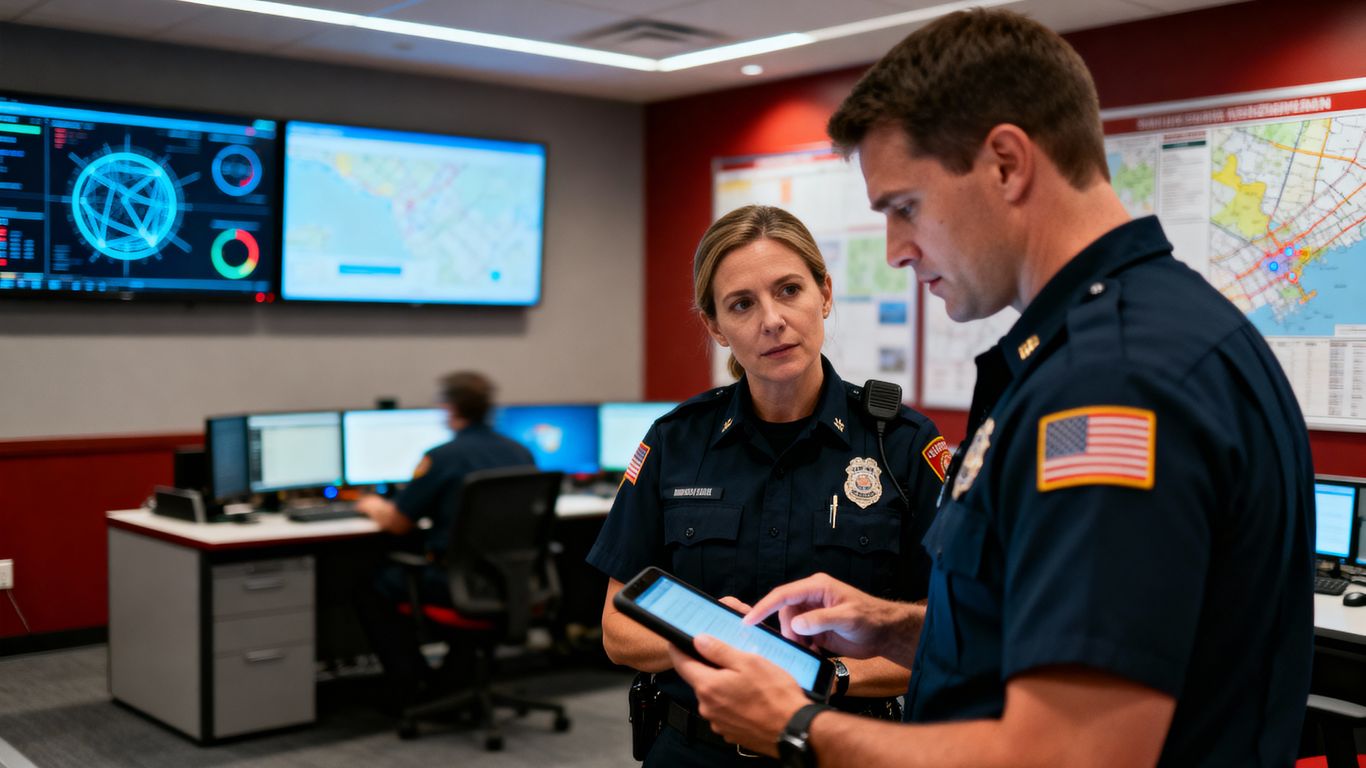
Moving to NERIS isn’t just about following new rules; it’s about making your department run smoother and smarter. Think about how much time is spent filling out reports. With NERIS, especially when paired with a good Records Management System (RMS), a lot of that manual work can be cut down. This means your team can spend less time at a desk and more time doing what they’re trained for.
Real-Time Data Analytics for Decision-Making
Before NERIS, getting a clear picture of what was happening often meant waiting for reports to be compiled, which could take months. Now, with NERIS, the data comes in much faster. This allows leaders to see what’s going on right now, not just what happened last year. This kind of up-to-the-minute information helps in making quick, smart choices about where to send resources or what kind of training is needed most.
- Faster Insights: Get data on incidents, response times, and resource use almost as soon as they happen.
- Better Planning: Use current information to decide on staffing levels, equipment purchases, and community outreach programs.
- Track Performance: See how well the department is doing against its goals and make adjustments as needed.
Improved Interagency Coordination
When different agencies can talk to each other using the same language, things get done a lot more efficiently. NERIS provides a standard way for fire departments, EMS, and other emergency services to share information. This is a big deal when multiple groups are responding to a large incident.
- Shared Information: All responding agencies can access consistent data about the situation, reducing confusion.
- Smoother Operations: Mutual aid requests and coordinated responses become simpler when everyone is on the same page.
- Unified Response: Working together effectively means better outcomes for everyone involved.
Streamlining Reporting Workflows
Let’s be honest, reporting can be a pain. NERIS aims to simplify this. By using an RMS that’s built for NERIS, you can automate a lot of the data collection and submission process. This means fewer errors and less time spent on paperwork.
| Feature | NFIRS (Legacy) | NERIS (with RMS) |
|---|---|---|
| Data Entry | Mostly manual, prone to errors | Automated from CAD, reduced manual input |
| Data Validation | Limited, often post-submission | Real-time checks, catches errors before submission |
| Reporting Frequency | Delayed, often annual or quarterly | Near real-time, continuous updates |
| Interoperability | Limited, difficult to share data | API-driven, easy data exchange with other systems |
| Analytics | Basic, delayed insights | Advanced, immediate insights for decision-making |
Preparing Your Agency for NERIS Implementation
Transitioning to the National Emergency Response Information System (NERIS) is a significant undertaking for any fire or EMS agency. It’s more than just a software update; it’s a shift in how critical incident data is managed and reported nationwide. To make this change as smooth as possible, careful planning and preparation are key. Ignoring these steps can lead to operational disruptions and compliance issues down the line.
Verifying Vendor Compatibility
One of the first and most important steps is to confirm that your current Records Management System (RMS) vendor is NERIS V1 compatible. Not all systems are created equal, and only vendors with official certification, like the “NERIS V1 Data Exchange Compatible” badge from the Fire Safety Research Institute, can guarantee your data will integrate correctly. If your vendor isn’t certified, you’ll need to start looking into alternatives and plan for data migration. This isn’t something to put off; discovering compatibility issues close to the deadline leaves very little room to maneuver. It’s wise to check the official list of certified vendors immediately. Choosing a compatible vendor means they’ll likely offer support for data migration and training, which is incredibly helpful during this period. You can find more information on vendor status and requirements on the Fire Safety Research Institute website.
Developing a Strategic Transition Plan
A well-thought-out plan is your roadmap through the NERIS transition. This plan should outline the entire process, from initial assessment to full implementation. Here’s a breakdown of what to consider:
- Assess Current Workflows: Take a close look at how your agency currently collects and reports incident data. Identify any gaps or areas where your existing processes won’t align with NERIS requirements. This assessment should happen well in advance, ideally 3-6 months before your agency’s scheduled transition.
- Technology Planning: Work closely with your RMS vendor to understand their NERIS compatibility timelines and integration capabilities. If you use third-party software, confirm their certification status and when full NERIS functionality will be available.
- Staff Training Needs: Determine what training your personnel will require. This includes understanding new data fields, system interfaces, and reporting protocols. Planning for training should begin 2-4 months before the transition.
- Data Migration Strategy: Figure out how you will move historical data from your old system to the new NERIS-compliant one. This needs to be done carefully to avoid data loss or corruption.
Addressing Data Migration Challenges
Moving your historical incident records to a new system can be one of the trickiest parts of the NERIS transition. You need to make sure that all the important information from your old system is preserved and correctly transferred to the new NERIS format. This isn’t just about copying files; it’s about ensuring data integrity and accuracy. Some agencies might face challenges if their current RMS platform isn’t designed for easy data export or if the new NERIS structure requires significant reformatting of old data. It’s important to discuss data migration support with your chosen vendor. Many vendors offer tools or services to help automate this process, which can save a lot of time and reduce the risk of errors. Planning for potential data cleansing or validation steps after migration is also a good idea to catch any issues that might have slipped through.
Empowering Your Team with NERIS Training
Transitioning to the National Emergency Response Information System (NERIS) is a significant shift for any fire and EMS agency. It’s not just about updating software; it’s about making sure everyone on your team knows how to use the new system effectively. We understand that your personnel are your most valuable asset, and providing them with the right training is key to a smooth and successful move to NERIS. Our approach focuses on making sure your team feels confident and capable, no matter their role.
Tailored Training Programs for All Staff
We recognize that a one-size-fits-all training approach doesn’t work for every department. That’s why we’ve developed training programs that can be adjusted to fit the specific needs of your agency. Whether you have a large, full-time staff or a combination of career and volunteer members, our training covers the essentials and the advanced features of NERIS reporting. We aim to make the learning process clear and practical, focusing on how the system directly applies to your daily operations. This means less time spent on confusing jargon and more time on building real skills that your team can use immediately. Our goal is to ensure that every member, from incident commanders to administrative staff, understands their part in accurate data collection and reporting under the new NERIS standards.
Online and On-Site Learning Opportunities
To accommodate different learning styles and schedules, we offer a flexible mix of training options. Our online modules provide a convenient way for your team to learn at their own pace, accessible anytime and anywhere. These interactive courses are designed to be easy to follow, covering everything from basic data entry to more complex reporting functions within the EPR FireWorks RMS platform. For those who benefit from direct interaction, we also provide on-site training sessions. Our experienced trainers can come to your department, offering hands-on guidance and addressing your agency’s unique workflows and challenges in a controlled setting. This blended approach helps ensure that all personnel receive the instruction they need to adapt to NERIS without disrupting critical operations.
Ongoing Support and Refresher Training
We believe that training isn’t a one-time event, especially with evolving systems like NERIS. To keep your team proficient, we provide continuous support and regular updates. This includes access to a comprehensive knowledge base, user manuals, and dedicated customer service channels to answer questions and resolve issues promptly. We also offer refresher training sessions to reinforce learning and introduce new features or changes to the NERIS system. By staying connected and providing ongoing resources, we help your agency maintain compliance and operational efficiency long after the initial transition. This commitment to continuous support means your team will always feel prepared and confident in their ability to manage NERIS reporting effectively.
The Strategic Value of Early NERIS Adoption
Making the switch to NERIS compliance sooner rather than later offers a lot more than just staying on the right side of regulations. It’s about positioning your agency to be more effective and respected. Think of it like getting ahead on your taxes; sure, you could wait until the last minute, but wouldn’t it be better to have it done and out of the way, freeing up your mind for other things?
Gaining a Competitive Edge in Grant Applications
When it comes to securing funding, especially through grants like AFG and SAFER, demonstrating your agency’s forward-thinking approach is key. Grant reviewers are increasingly looking for evidence that departments are using data to make smart decisions and measure their performance. NERIS reporting provides the tools to do just that. Instead of just saying you responded to a certain number of calls, you can show detailed analysis of community risks, how quickly your crews arrived, and how effectively resources were used. This kind of detailed information makes your grant applications much stronger. It helps your proposals stand out when there are so many others competing for the same funds. A well-prepared application, backed by solid data, can make all the difference. You can find more information on how systems can help with community engagement and operational efficiency on this page.
Improving Public Trust and Accountability
Adopting NERIS standards early sends a clear message to the public and other stakeholders: your agency is committed to best practices and transparency. When your reporting is up-to-date and accurate, it builds confidence. It shows that you’re managing resources responsibly and are dedicated to providing the best possible service. This improved accountability can strengthen relationships with local government, community leaders, and the citizens you serve. It’s about being a good steward of public resources and demonstrating that commitment through reliable data.
Positioning for Future Emergency Response Needs
The world of emergency response is always changing. New challenges pop up, and technology keeps advancing. By getting on board with NERIS early, your agency is better prepared for whatever comes next. The system is designed for better data sharing and real-time insights, which are vital for coordinating responses, especially during large-scale events or mutual aid situations. Being an early adopter means your team is already familiar with the new processes and technology, allowing you to adapt more quickly to evolving demands. This proactive stance helps ensure your department remains effective and efficient, no matter the situation. The official transition deadline is January 2026, so starting now means you avoid the rush and can focus on what truly matters: serving your community.
Getting started with NERIS early on can really make a difference. It helps your team work smarter and faster, which is super important when every second counts. Think of it as giving your agency a powerful tool to handle everything smoothly. Want to see how NERIS can boost your operations? Visit our website today to learn more!
Looking Ahead
So, we’ve talked about what NERIS is and why it’s becoming the new standard for fire and EMS reporting. It’s a big change, no doubt about it, and getting everything ready can seem like a lot. But really, it’s about making sure everyone’s on the same page with data, which helps us all do our jobs better. Using a system that’s already set up for NERIS, like EPR FireWorks, takes a lot of the guesswork out of it. It means your department can focus more on what matters – responding to calls and keeping people safe – instead of getting bogged down in paperwork and compliance headaches. Getting this right now sets you up for smoother operations down the road.
Frequently Asked Questions
What exactly is NERIS and why is it important for fire departments?
NERIS stands for the National Emergency Response Information System. Think of it as a new, updated way for fire departments across the country to share information about emergencies. It’s replacing an older system called NFIRS. NERIS is important because it helps everyone use the same kind of data, making it easier to understand what’s happening, share information between different agencies, and make smarter decisions to keep communities safe. It’s like upgrading from an old flip phone to a smartphone – it does more, faster, and better.
How does a Records Management System (RMS) like EPR FireWorks help with NERIS compliance?
An RMS is like a central filing cabinet for all your department’s information. When it’s designed for NERIS, it helps collect all the necessary details about emergencies in the right format. This means less manual work for your team, fewer mistakes, and a higher chance that the data is complete and accurate. EPR FireWorks, for example, is built to work with NERIS, making it easier for your department to meet the new reporting rules without a lot of extra hassle.
What are the biggest challenges fire departments face when switching to NERIS?
Switching to NERIS can be tricky. One big challenge is moving old data to the new system without losing anything important. Another is making sure everyone on the team knows how to use the new system and understands the new rules for reporting. Sometimes, the software departments are currently using might not work well with NERIS, meaning they might need to get new software or update their current system, which takes time and money.
When will fire departments absolutely have to use NERIS instead of NFIRS?
The deadline is approaching fast! Starting January 1, 2026, all fire incident reporting will need to be done using NERIS. The old NFIRS system will no longer be available after that date. So, it’s really important for departments to get ready and make sure their systems are set up for NERIS well before then.
What makes EPR FireWorks a good choice for a department preparing for NERIS?
EPR FireWorks is designed to be compatible with NERIS V1, meaning it’s ready for the new reporting standards. It helps collect and manage your data all in one place, making the switch easier. Plus, it offers features like cloud access so you can get to information from anywhere, and can help connect with other systems. They also offer training to help your team learn the new system, which is a big help during this transition.
Besides just reporting, what other benefits does using a NERIS-ready RMS offer?
Using a system like EPR FireWorks that’s ready for NERIS does more than just help you report correctly. It can help your department make better decisions because you’ll have more accurate and up-to-date information. It can also improve how different emergency teams work together and make your daily tasks run more smoothly. Being prepared early can also make your department look stronger when applying for grants or showing the community how well you’re doing your job.